报告详情
Sensors for In Situ Hyperspectral IOP Measurements to Support Ocean Color Data Product Development and Validation
编号:1344
访问权限:仅限参会人
更新:2026-08-31 23:55:03 浏览:59次
张贴报告

报告开始:2027年01月15日 16:30(Asia/Shanghai)
报告时间:15min
所在会场:[S11] Session 11 - Cross-Scale Physical–Biogeochemical Coupling and Ecological Responses in the Ocean:From Internal Waves to mesoscale processes [S11P] S11-Poster
暂无文件
摘要
Absorption, scattering, and attenuation are inherent optical properties (IOPs) that describe how light interacts with water independent of the ambient light field. These properties have critical implications in ocean color remote sensing as they impact the light measured by satellites which is then used to produce ocean color data products such as phytoplankton community composition, chlorophyll concentration, and other biogeochemistry parameter maps. Having accurate in situ measurements of these IOPs is therefore necessary to both develop and validate data products from satellites monitoring ocean health. In situ measurements must also meet the spectral (range, resolution) requirements of these satellites; as next-generation missions, such as NASA’s Plankton, Aerosol, Cloud, and ocean Ecosystem (PACE), move from multispectral to hyperspectral measurements spanning ultraviolet to near infrared wavelengths, instrumentation for IOP measurements must similarly advance to match these capabilities. However, many sensors for in situ IOP measurements have historically been limited to single or multiple wavelengths in the visible spectrum.
Here we will present recent sensor developments for measuring hyperspectral absorption (Hyper-a), backscattering (Hyper-bb), and beam attenuation (Hyper-c) in situ in marine and freshwater environments. We will discuss the measurement principles of the sensors and key elements of the optical and mechanical designs. We will present results on calibration and characterization of the sensors to establish key performance metrics. Finally, we will present experimental results from laboratory and in situ measurements and demonstrate both the individual sensor capabilities and the complementary nature of the different measurements. We will prioritize discussion of the Hyper-c sensor, as it is the newest of the three sensors and still under development.
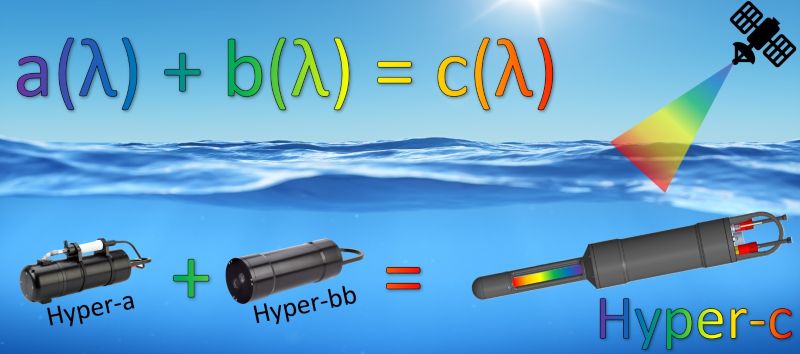
Here we will present recent sensor developments for measuring hyperspectral absorption (Hyper-a), backscattering (Hyper-bb), and beam attenuation (Hyper-c) in situ in marine and freshwater environments. We will discuss the measurement principles of the sensors and key elements of the optical and mechanical designs. We will present results on calibration and characterization of the sensors to establish key performance metrics. Finally, we will present experimental results from laboratory and in situ measurements and demonstrate both the individual sensor capabilities and the complementary nature of the different measurements. We will prioritize discussion of the Hyper-c sensor, as it is the newest of the three sensors and still under development.
关键词
暂无
报告人

Ole Mikkelsen
President and CEO Sequoia Scientific Inc稿件作者
全部评论
重要日期
-
会议日期
01月12日
2027
至01月15日
2027
-
07月21日 2026
初稿截稿日期
-
01月15日 2027
注册截止日期
主办单位
State Key Laboratory of Marine Environmental Science, Xiamen University (MEL)
Department of Earth Sciences, National Natural Science Foundation of China (NSFC)
Department of Earth Sciences, National Natural Science Foundation of China (NSFC)
联系方式
- Zhijia (Jessica) Ye
- x******@xmu.edu.cn
- +86*********
历届会议
-
2024年12月11日 中国
第七届厦门海洋环境开放科学大会(XMAS 2025) -
2023年01月09日 中国 Xiamen
第六届厦门海洋环境科学开放大会


发表评论